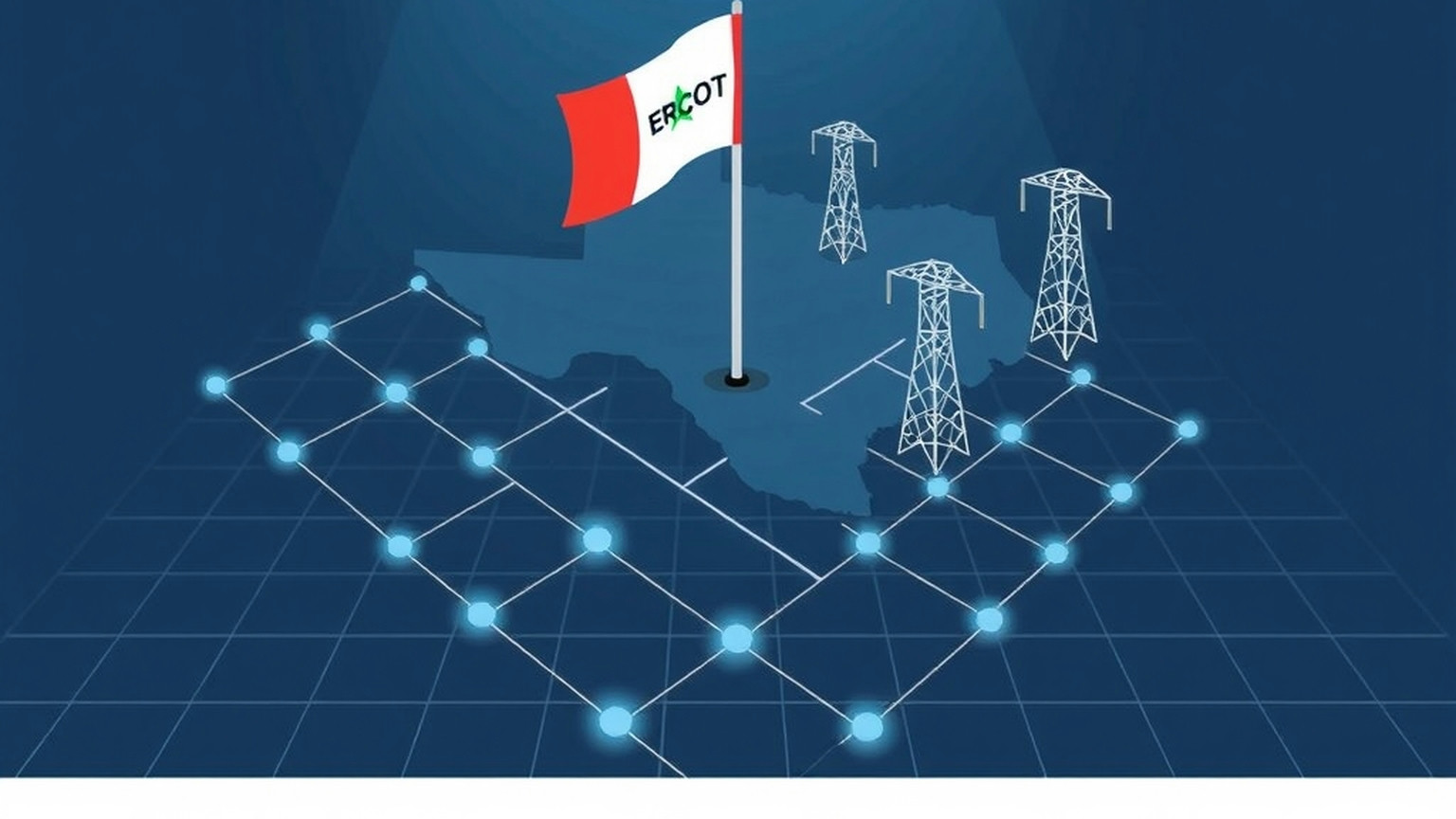

Key takeaways
- PCLR means Provisional Controllable Load Resource. It is not a review process and it does not replace Batch Zero.
- ERCOT designed PCLR as an optional operating path within the Batch Zero framework: part of a large load can be firm, while the rest can be dispatchable.
- The full requested load is studied. The firm share is the Low Power Consumption; the flexible share must follow ERCOT dispatch instructions when the PCLR framework is active.
- ERCOT partially implemented the Batch Zero rule package in July 2026, but deferred the PCLR-specific operating provisions. A signed Form W is therefore a commitment to the pathway, not proof that flexible megawatts can operate today.
- PCLR status does not itself guarantee a megawatt allocation, an interconnection agreement or permission to energize.
What PCLR actually means
PCLR is ERCOT’s acronym for Provisional Controllable Load Resource. The distinction matters because an earlier draft of this guide expanded the acronym incorrectly and then described a technical model review that does not exist under that name.
The actual PCLR concept is a way to divide a large customer’s requested demand into two operational pieces. ERCOT’s Batch Zero study update describes:
- a firm portion called Low Power Consumption (LPC); and
- a remaining flexible portion that operates as a PCLR and is subject to dispatch.
That structure is aimed at a practical grid constraint. A data center may want more power than the transmission system can initially support as firm demand. Under the proposed PCLR path, ERCOT can study the full request while treating only a defined share as firm until transmission upgrades are completed.
How PCLR fits inside Batch Zero
Batch Zero is the broader study. ERCOT says it groups qualifying projects of 75 MW or more into one system-wide assessment so the grid operator can evaluate combined reliability effects, allocate available transmission capacity and identify upgrades. PCLR is one possible operating treatment for a project inside that framework.
The relationship is easiest to read as a sequence:
- A qualifying large load entered the transitional Batch Zero process.
- A project choosing the PCLR path submitted Section 23 Form W, declaring its intent and commitment to register as a PCLR.
- ERCOT studies the project’s full requested demand with the rest of the batch.
- The study can define a firm LPC and a flexible remainder.
- Once the required market systems and rules are implemented, the flexible portion would operate as dispatchable demand.
ERCOT’s Large Load Integration page says the project entity had to sign and notarize Part A of Form W and submit it to its transmission or distribution provider by July 10, 2026. The provider then had to send the form to ERCOT by July 24.
Those dates were Batch Zero entry deadlines. They are not a recurring PCLR application calendar, and filing the form did not establish a final allocation.
Firm load versus flexible load
The LPC is the portion a project can treat as firm under the eventual study outcome and associated conditions. The remaining demand is not simply extra firm capacity. ERCOT’s design makes it dispatchable.
The April study update says a PCLR would participate as demand in Security-Constrained Economic Dispatch, or SCED, and follow basepoints within its operating range. In plain language, the flexible share has to move when ERCOT’s market dispatch tells it to move. That is fundamentally different from a voluntary promise to reduce consumption during occasional grid emergencies.
The same ERCOT material says the full requested load remains in the transmission study. Planned upgrades can then provide a path for more of the site to become firm over time. PCLR does not erase the need for those upgrades; it is a bridge for operating before the full buildout is available.
For data-center operators, that makes workload design central to the economics. The flexible portion would need enough operational headroom to respect dispatch instructions without breaching customer commitments. Batch jobs, training runs or geographically movable work may be easier to shift than latency-sensitive inference, storage or network services. That is an engineering and commercial judgment for each project, not a capability ERCOT’s rules assume every data center has.
What was implemented—and what is still pending
The legal framework and the live operating capability are not the same thing.
ERCOT’s PGRR145 record shows that the Public Utility Commission of Texas approved the Batch Zero revision on June 18, 2026. The record also separates the core Batch Zero effective date from PCLR provisions that depend on system implementation.
ERCOT then issued a partial-implementation notice for July 11. That notice explicitly left several PCLR provisions unimplemented, including the protocol section for PCLR ramp-rate requirements and Planning Guide provisions covering additional energization and operating requirements. ERCOT said those portions would take effect later.
As of October 12, 2026, ERCOT’s public notices do not show a later PCLR implementation notice. The safe reading is therefore:
- PCLR is an approved pathway in the Batch Zero rule package.
- Form W documented a project’s intent to use it.
- The specific operating machinery is not yet fully live.
Any project schedule that assumes immediate PCLR operation should be checked against the newest ERCOT implementation notice rather than the approval date alone.
What PCLR does not guarantee
PCLR is not a shortcut around the interconnection process. It does not by itself provide:
- a final Batch Zero classification or megawatt allocation;
- an executed interconnection agreement;
- permission to energize;
- a fixed date for transmission upgrades; or
- freedom to consume the flexible portion regardless of ERCOT dispatch.
It also does not turn all data-center demand into a grid resource automatically. The operating range, ramp capability, telemetry, registration and control requirements determine whether a project can perform as a dispatchable load once the remaining rules are implemented.
The bottom line
ERCOT’s PCLR design is best understood as partial firm service plus dispatchable demand. Batch Zero studies the full large-load request; the LPC identifies the firm share; and the PCLR portion is intended to follow SCED until transmission expansion supports more firm consumption.
That could make phased data-center growth more workable in a congested grid. But it is an approved framework still awaiting full operational implementation—not a completed technical review, a capacity award or an authorization to energize.
Sources
This article was researched and fact-checked against the following sources:
- ERCOT PCLR Guide: Batch Zero, LPC, MPC & Curtailment (keentelengineering.com)
- ERCOT Batch Zero Guide: Large Load & Ride-Through Rules (keentelengineering.com)
- Texas Large Load Interconnection Update: ERCOT Batch Zero Pause and Verification Process | Thought Leadership | August 2026 | Baker Botts (bakerbotts.com)
- Texas Approves ‘Batch Zero’ Study as Data Center Demand Soars (datacenterknowledge.com)
- ERCOT Discusses 'Batch Zero' Study at Large Load Meeting Following PUC Approval | Energy | The Texan (thetexan.news)
- Large Load Integration (ercot.com)
- Batch Study Update (ercot.com)
- PGRR145: Batch Zero Process for Large Load Interconnections (ercot.com)
- Partial Implementation Details of PGRR145/NPRR1325 (ercot.com)
- PUCT Approves ERCOT Batch Zero Process (ercot.com)