Key takeaways
- Alphabet spent $44.924 billion on property and equipment in Q2 2026, up from $22.446 billion a year earlier.
- First-half 2026 capital expenditure reached $80.598 billion.
- Assets not yet in service rose to $122.814 billion at June 30, from $78.592 billion at year-end 2025.
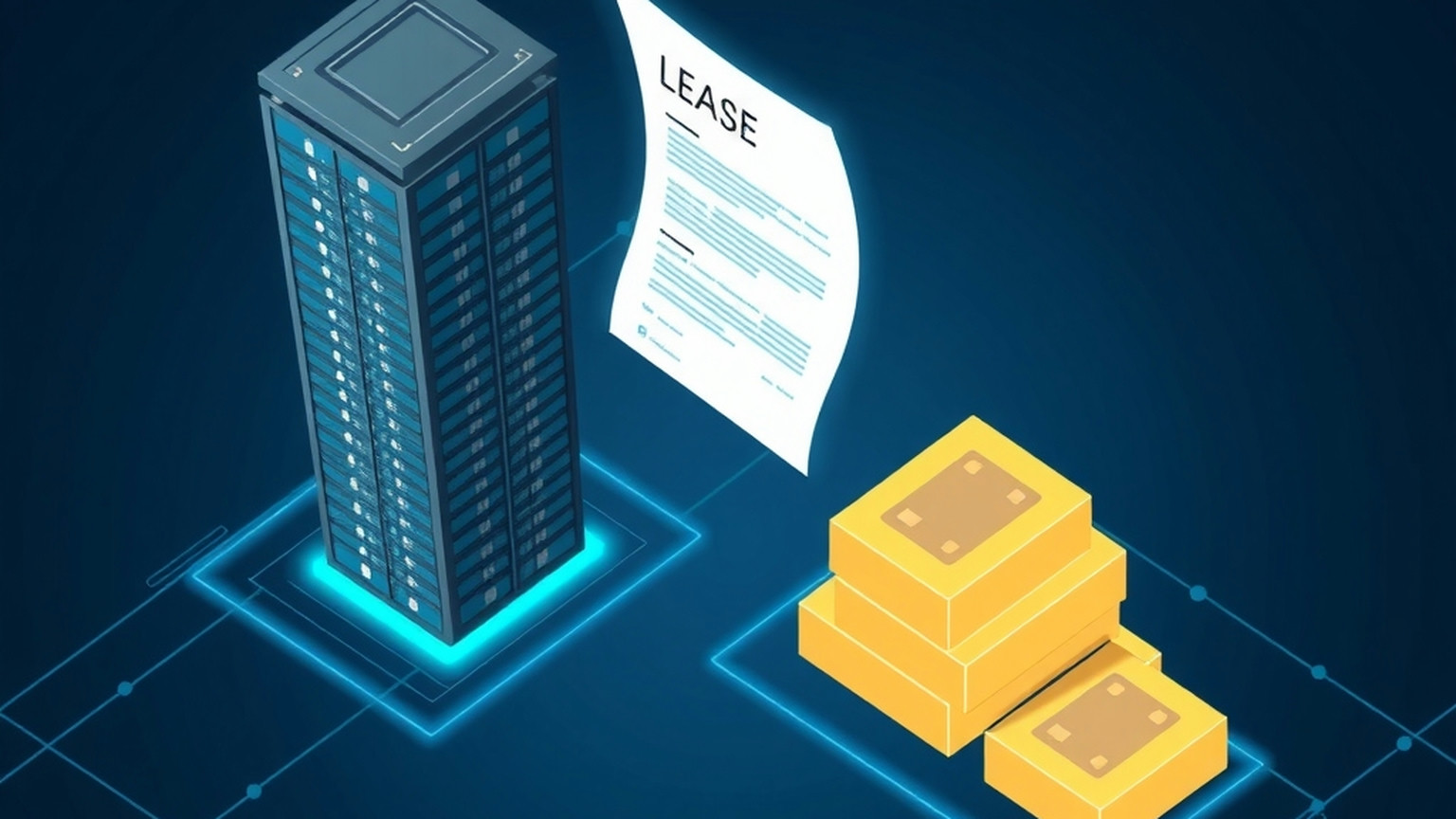
- Alphabet disclosed $85.2 billion of future payments under leases—primarily for data centers—that had not yet commenced.
- Q2 free cash flow was negative $5.855 billion under Alphabet’s definition, as operating cash flow of $39.069 billion was below capital expenditure.
The Q2 capex number is a cash-flow measure
Alphabet’s Q2 2026 earnings release reports $44.924 billion of purchases of property and equipment for the quarter. Rounded, that is the headline $44.9 billion capex figure. The comparable Q2 2025 amount was $22.446 billion, so the quarterly cash outlay roughly doubled year over year.
The Form 10-Q puts first-half 2026 capex at $80.598 billion, versus $39.643 billion in the first half of 2025.
Those figures describe cash paid for property and equipment during each period. They should not be added to either the assets-not-yet-in-service balance or future lease commitments: those are different accounting measures taken at a point in time.
$122.8 billion was not yet in service
At June 30, Alphabet reported $122.814 billion of assets not yet in service, up from $78.592 billion at December 31, 2025. The increase was $44.222 billion over six months.
“Not yet in service” is broader than unfinished data-center buildings. Alphabet defines the category as assets that are not ready for their intended use, including assets in construction or assembly, and says it consists primarily of technical infrastructure. A multi-year data-center project can include land, buildings, servers and network equipment at different stages before depreciation begins.
That distinction matters because capex starts as a cash-flow event, while depreciation starts only when an asset is ready for use. The expanding balance signals a large amount of infrastructure still moving through construction and assembly, but it does not reveal the completion date or eventual capacity of any particular campus.
The 60% figure is an asset mix, not a Q2 spending split
The filing says approximately 60% of technical-infrastructure assets at both December 31, 2025 and June 30, 2026 consisted of servers and network equipment. The remainder consisted of data-center land, buildings and related assets.
That is a description of the technical-infrastructure asset base on the balance sheet. It does not say that 60% of Q2’s $44.924 billion went to servers or that the remaining 40% was Q2 construction spending. Treating the two disclosures as interchangeable would overstate what Alphabet reported.
The filing also does not isolate an AI-only share of Q2 capex. Alphabet says its technical infrastructure supports servers, networking and data centers across the business, so the $44.924 billion should be described as company-wide capex rather than a pure AI budget.
What the $85.2 billion lease commitment means
Alphabet also disclosed $85.2 billion of future payments under leases that had not yet commenced, primarily related to data centers. The leases are scheduled to begin between 2026 and 2031 and have non-cancelable terms ranging from one to 26 years.
The filing says those payments were not yet recorded in the lease-liability balance. They are therefore separate from the $21.333 billion of undiscounted operating-lease payments and $2.920 billion of undiscounted finance-lease payments for leases already reflected in the schedule.
The $85.2 billion is not an immediate cash payment, not Q2 capex and not proof that every planned site will open on a particular date. It is a long-dated contractual commitment that shows how much of Alphabet’s capacity strategy extends beyond assets it already owns or has placed in service.
Why free cash flow turned negative
Alphabet generated $39.069 billion of operating cash flow in Q2. Subtracting $44.924 billion of capital expenditure produced negative free cash flow of $5.855 billion under the company’s non-GAAP definition.
That figure is more precise than calling the quarter a generic “cash burn.” Alphabet’s total cash position also reflects financing, investments, acquisitions and other flows. The free-cash-flow calculation answers a narrower question: did cash generated by operations cover property-and-equipment purchases during the quarter? In Q2, it did not.
What investors and infrastructure planners should watch
Three measures now show different stages of the same buildout:
- $44.924 billion of Q2 capex records cash paid during the quarter.
- $122.814 billion of assets not yet in service records infrastructure still being prepared for use at quarter-end.
- $85.2 billion of uncommenced lease payments records future contractual payments for space, primarily data centers, that Alphabet had not yet occupied.
The figures demonstrate scale, but they do not disclose site-by-site power, accelerator counts, utilization or completion dates. Those details require separate project-level evidence. For now, the clean conclusion is that Alphabet is funding a very large infrastructure pipeline through both owned assets and future leased capacity—and that the timing differences between those categories are essential to reading the numbers correctly.
Sources
This article was researched and fact-checked against the following sources:
- Google’s $205B AI Data Center Bet Rattles Wall Street (finance.yahoo.com)
- Alphabet AI CapEx & Infrastructure Spending — AI CapEx Tracker (nextgig.rocks)
- Alphabet Hiked Capex to $205B, Then Its Stock Fell 5% (valueaddvc.com)
- Alphabet’s cash burn tightens AI capex gates in 2026 (marketscale.com)
- Attention Required! | Cloudflare (fierce-network.com)
- Alphabet Form 10-Q for the quarter ended June 30, 2026 (sec.gov)
- Alphabet Announces Second Quarter 2026 Results (sec.gov)