Key takeaways
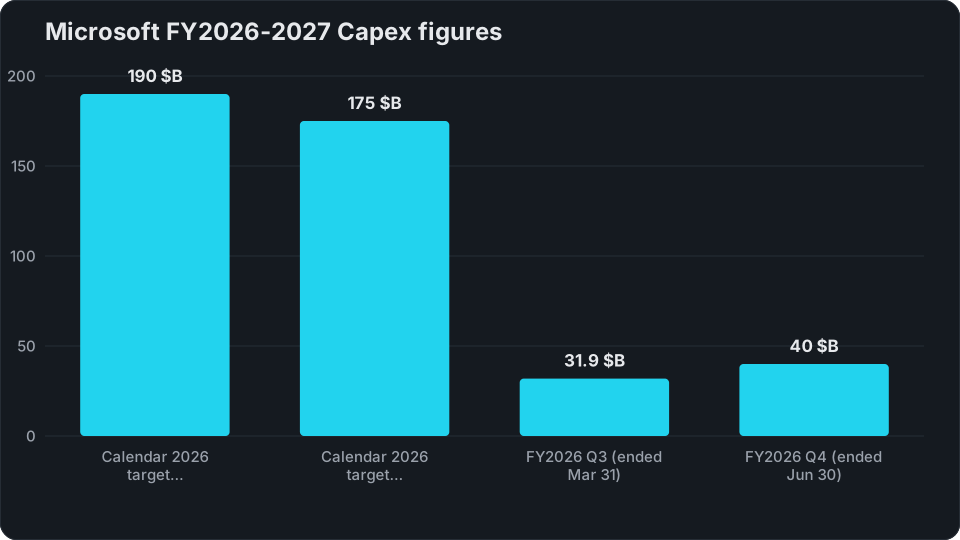
- Microsoft’s calendar‑2026 capital‑expenditure target was about $190 billion; a lease-classification change tied to new useful-life estimates lowered expected reported capex to roughly $175 billion, while underlying investment plans were otherwise unchanged.
- Reported capex blends cash purchases of property, plant & equipment (PP&E) with finance‑lease acquisitions, which are counted as capex even though cash is paid over the lease term.
- Extending the depreciable useful life of data‑centre and office assets from 15 to 25 years shifts many finance leases to operating leases, trimming the headline capex number.
- FY2026 Q3 capex was $31.9 billion, while cash paid for PP&E was $30.9 billion; FY2026 Q4 capex then reached $41 billion.
- Roughly two‑thirds of the Q3 spend went to short‑lived compute (GPUs/CPUs), and $25 billion of the $190 billion plan is attributed to component‑price inflation rather than new capacity.
- Microsoft said in its FY2026 Q1 call that it planned to increase total AI capacity by more than 80 % during the fiscal year and roughly double its overall datacentre footprint within two years.
1. Calendar‑2026 capex guidance vs FY2027 accounting outlook
Microsoft set its calendar‑2026 capital‑expenditure target at about $190 billion. During its July 29 2026 earnings briefing, the company announced that, starting in fiscal 2027, it would lengthen the estimated useful life of datacentre and office assets from 15 to 25 years. Microsoft said its underlying calendar‑2026 investment expectations were otherwise unchanged, but that the resulting shift of some future datacentre leases from finance to operating leases lowered expected reported capex to roughly $175 billion. The CFO described the effect on FY2027 operating income as “a minimal benefit.”
2. Cash PP&E versus reported capex (finance‑lease impact)
GAAP capex reported by Microsoft includes both cash‑paid PP&E and the acquisition of finance leases . Finance‑lease assets are capitalised on the balance sheet and counted in capex, even though the actual cash outflow is spread over the lease term. Consequently, the cash‑paid PP&E figure shown in any quarter is materially lower than the headline capex number.
3. Fiscal‑year versus calendar‑year reporting
Microsoft’s fiscal year ends on June 30, whereas the $190 billion figure is expressed on a calendar‑year basis. Quarterly results therefore need to be normalised when comparing fiscal‑quarter capex with the calendar‑year target. In FY2026 Q3, ended March 31, Microsoft reported $31.9 billion of capex and $30.9 billion of cash paid for PP&E—related but distinct measures. FY2026 Q4 capex subsequently reached $41 billion, including finance leases.
4. Useful‑life extension and lease re‑classification
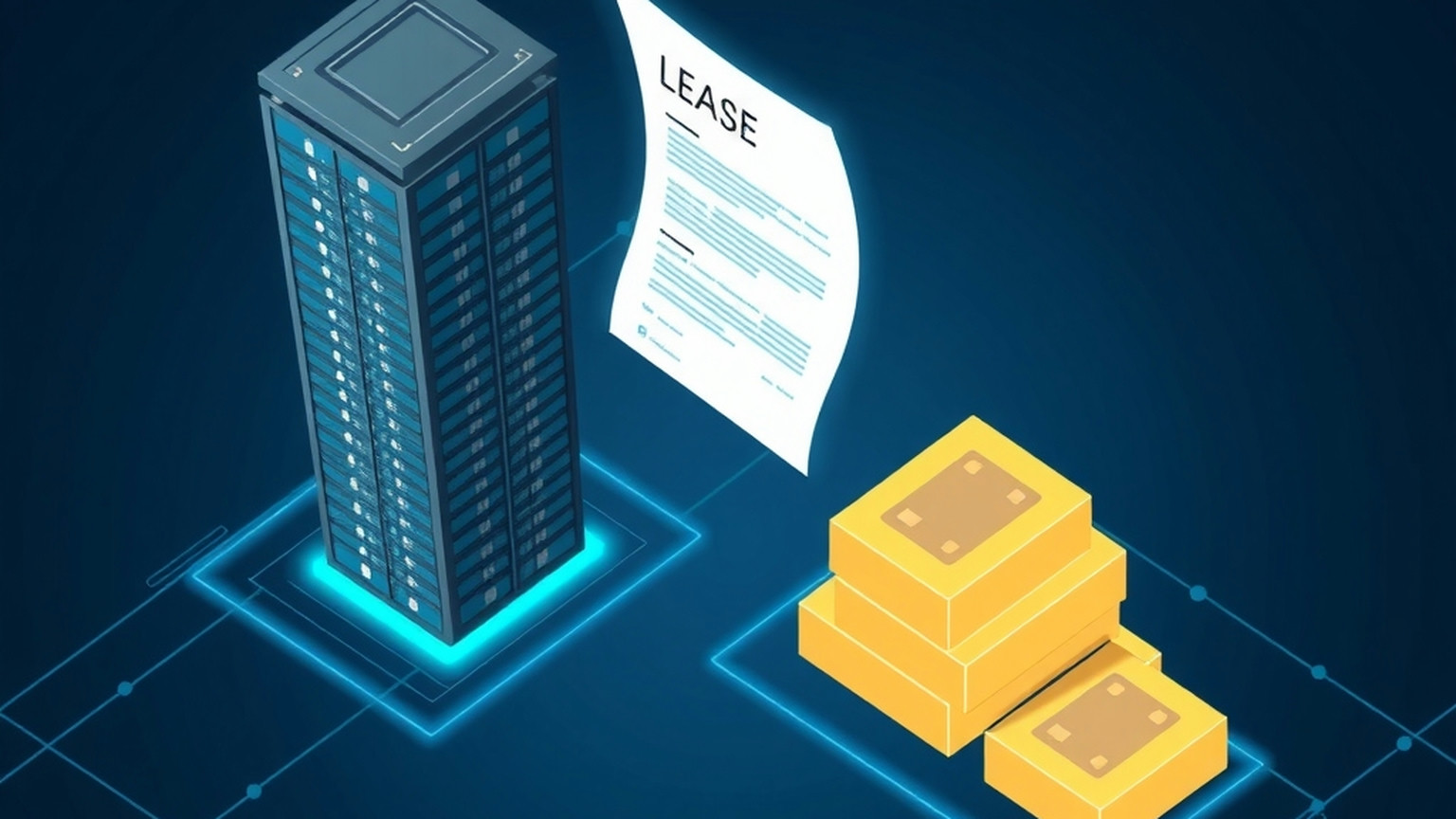
By extending the useful life of its facilities, Microsoft will re‑classify a portion of future data‑centre leases from finance leases to operating leases. Finance leases are counted in capex, while operating leases are excluded . The company said the shift will move “more of our future data centre leases … from finance leases to operating leases as a result of this update” , reinforcing the reduction in the FY2027 capex headline.
5. Quarterly spending snapshots
| Period | Reported capex | Key context |
|---|---|---|
| FY2026 Q3 (ended Mar 31) | $31.9 B (GAAP) | Short‑lived compute made up roughly two‑thirds of spend ; YoY increase of 85 % |
| FY2026 Q4 (ended Jun 30) | $41 B (reported) | $35.8 B cash PP&E; 31 datacentres added, bringing the fiscal-year total to 88 |
| Calendar 2026 target (pre‑change) | $190 B (company‑wide) | Includes finance‑lease additions and long‑lived sites |
| Calendar 2026 expected reported capex (revised) | ~ $175 B | Reflects finance-to-operating lease reclassification; investment plans otherwise unchanged |
6. Composition of the spend – short‑lived compute vs long‑lived sites
Yield Theory notes that roughly two‑thirds of FY2026 Q3 capex was directed toward short‑lived assets such as GPUs and CPUs . The remaining portion covered long‑lived data‑centre sites and infrastructure that Microsoft intends to use for 15 + years (now 25 years after the accounting change).
7. Component‑price inflation as a driver
Microsoft attributed $25 billion of its $190 billion capex plan to higher component prices, especially for GPUs and memory, rather than to additional capacity . The company said roughly $5 billion of the sequential increase expected for Q4 reflected higher component prices; reported Q4 capex ultimately reached $41 billion.
8. AI‑specific capacity signals
In its FY2026 Q1 earnings call, Microsoft said it planned to raise total AI capacity by more than 80 % during the fiscal year and roughly double its overall datacentre footprint within two years. By the FY2026 Q3 call, the company said its Fairwater datacentre in Wisconsin had come online six weeks ahead of schedule.
9. Operational backdrop – revenue and cash flow
For FY2026 Q4, Microsoft reported total revenue of $90 billion and Microsoft Cloud revenue of $59.3 billion; Azure and other cloud services revenue grew 43 % year over year. In the preceding Q3, operating cash flow rose 26 % to $46.7 billion and free cash flow was $15.8 billion as infrastructure spending remained heavy.
10. Outlook and monitoring points
Quarterly capex splits (finance leases vs cash PP&E) will show how the roughly $175 billion expected reported-capex figure tracks against actual cash investment.
Component‑price trends for GPUs and memory could push short‑lived asset spending higher.
Depreciation disclosures will show the timing effect of the 25‑year useful life, which Microsoft expects to provide only a minimal FY2027 operating-income benefit.
Conclusion Microsoft’s AI datacentre capex story blends accounting treatment with large cash outlays. The original $190 billion calendar‑2026 expectation included finance‑lease additions and short‑lived compute purchases; the lease-classification shift lowered expected reported capex to about $175 billion without changing the company’s underlying investment plan. Q4 capex reached $41 billion, and Microsoft attributed $25 billion of its calendar‑year expectation to component-price inflation. The most useful signals now are cash PP&E, finance-lease additions, and how quickly new capacity begins generating revenue.
Sources
This article was researched and fact-checked against the following sources:
- Who Is Funding AI Data Centers? Capital Atlas 2024-2026 (savrn.com)
- Microsoft Fiscal Year 2026 First Quarter Earnings Conference Call (microsoft.com)
- Microsoft AI Capex in 2026: $190B Spending Guide | Yield Theory (yieldtheory.app)
- Microsoft holds the line on AI spending plans (finance.yahoo.com)
- Microsoft Q3 FY2026: The $190B Capex Plan That Repriced AI (globaldatacenterhub.com)
- Microsoft Fiscal Year 2026 Third Quarter Earnings Conference Call (microsoft.com)
- Microsoft Fiscal Year 2026 Fourth Quarter Earnings Conference Call (microsoft.com)